

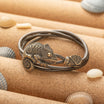
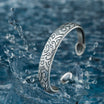

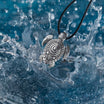
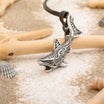



Bronze jewelry has a warm, distinctive color that looks very different from silver, steel or gold. But if you wear a bronze bracelet or pendant regularly, you may eventually notice that its surface begins to change.
It may become slightly darker. Some areas may develop a deeper brown tone. Polished surfaces may gradually lose some of their original brightness.
So, does bronze jewelry tarnish?
Yes. Bronze naturally changes over time.
This is not necessarily a defect or a sign of poor-quality metal. It is a normal characteristic of bronze and other copper-based alloys. The copper in bronze reacts gradually with substances in its environment, creating changes on the surface of the metal.
At Pakabone, we make jewelry in both solid bronze and silver-plated bronze, and these two finishes behave differently over time.
Understanding what is happening — and knowing how to clean your jewelry without destroying its intended finish — makes bronze jewelry very easy to live with.
Why Does Bronze Jewelry Tarnish?
Bronze is an alloy based primarily on copper.
Pakabone uses an Italian bronze alloy containing approximately 88% copper and 12% tin. It is free from lead, cadmium and nickel.
Copper is a reactive metal. When exposed to air, moisture and various substances in its surroundings, chemical reactions gradually occur at its surface.
These reactions can create copper oxides, sulfides and other compounds that change the appearance of the metal.
That is what we commonly describe as tarnishing or patination.
The change does not usually happen evenly.
Raised areas that constantly touch clothing or skin may remain brighter because they are naturally polished through friction, while recessed areas can become darker.
This difference can actually make a detailed bronze object more visually interesting.
Tarnish and Patina Are Not Always a Bad Thing
When people hear the word "tarnish," they often assume something has gone wrong.
With bronze, that is not necessarily the case.
Bronze has been valued for centuries partly because of the way its surface develops with age. A stable surface layer can range from warm brown to much darker tones depending on the alloy, environment and treatment of the metal.
In sculpture, this surface coloration is commonly referred to as patina.
Pakabone uses this characteristic deliberately.
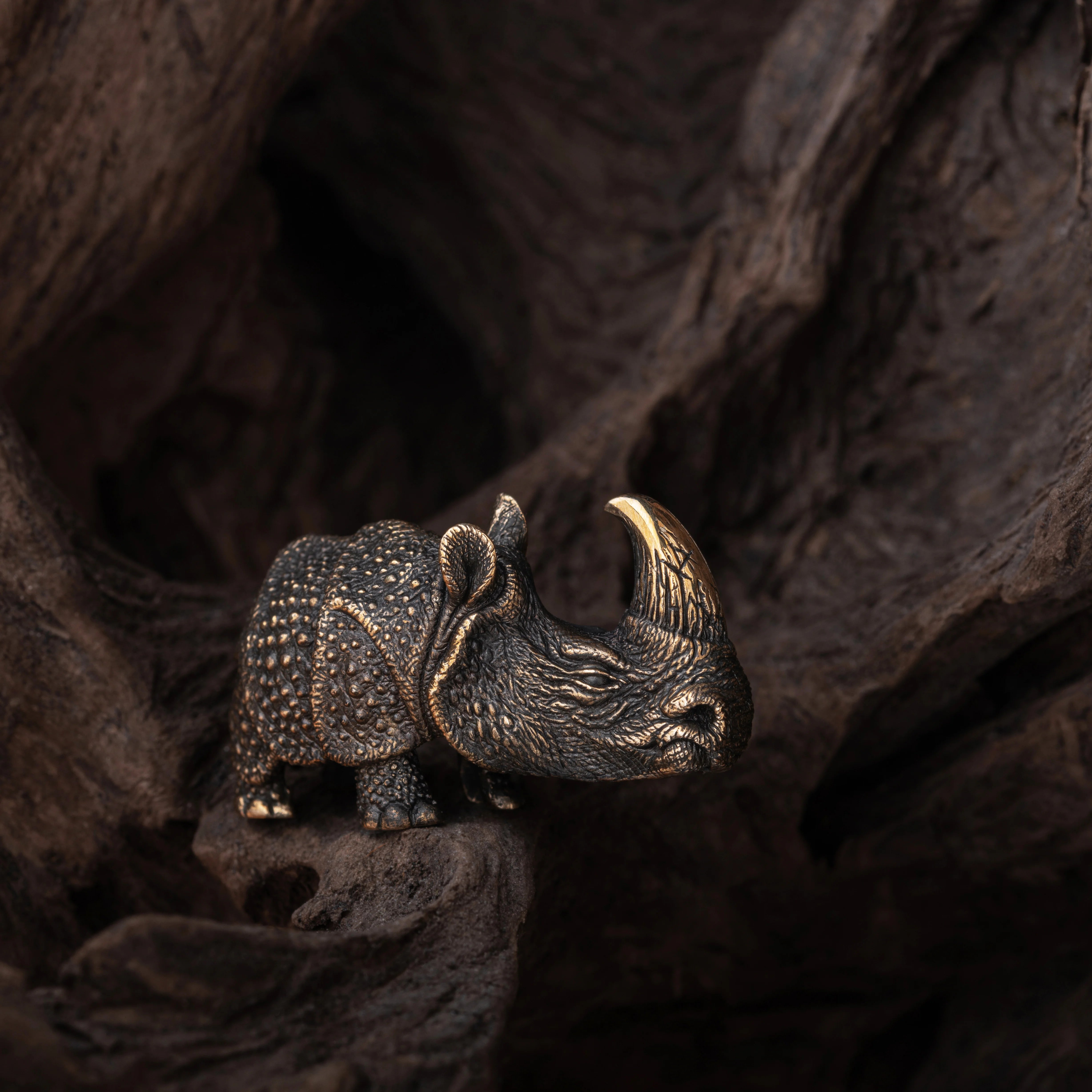
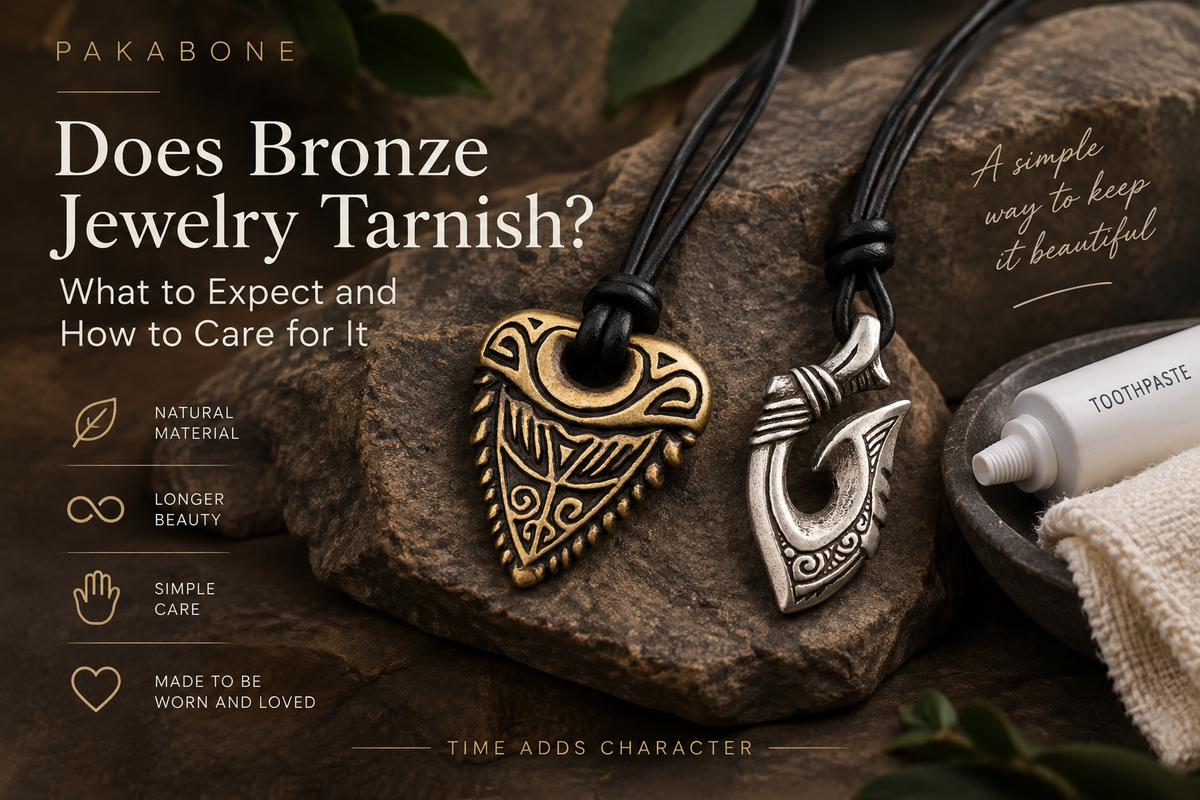
Many of our pieces are sculptural and contain small recessed details, engraved patterns and textured surfaces. During finishing, we intentionally apply patina and darken selected recessed areas.
The raised surfaces can then remain brighter, creating contrast and making the sculptural details easier to see.
For this reason, the goal of cleaning Pakabone bronze jewelry is not to remove every dark area and make the entire piece uniformly bright.
Some of that darkness is part of the design.
What Does Tarnished Bronze Jewelry Look Like?
The most common change in regularly worn bronze jewelry is gradual darkening.
A new or freshly polished bronze surface may have a relatively bright, warm golden-brown appearance. With time, it can become deeper brown and less reflective.
How quickly this happens varies considerably.
Humidity, perspiration, cosmetics, skin contact, storage conditions and exposure to different substances can all influence how the surface develops.
Two people wearing the same bronze bracelet may therefore notice different changes over the same period.
And because frequently touched raised surfaces may stay brighter than recessed areas, the jewelry can gradually develop more contrast as it is worn.
This evolving surface is one of the characteristics that distinguishes solid bronze from metals designed to remain visually unchanged.
Does Bronze Jewelry Turn Your Skin Green?
It can.
Because bronze contains a high proportion of copper, copper-containing compounds can sometimes form on the metal and transfer to the skin.
The result may be a temporary green or blue-green mark, particularly where the jewelry is in close contact with the skin.
Perspiration, moisture and individual skin chemistry can influence how readily this happens.
It does not automatically mean that the bronze is poor quality.
It is related to the presence of copper in the alloy and the chemical reactions taking place at the surface.
Some people experience this frequently when wearing copper or bronze jewelry, while others rarely notice it.
Keeping both the jewelry and the skin clean and dry can help reduce the effect.
Solid Bronze vs Silver-Plated Bronze
Not every Pakabone piece has an exposed bronze surface.
We produce our jewelry in two main finishes:
Solid Bronze
Our solid bronze pieces are made from an Italian bronze alloy containing approximately 88% copper and 12% tin.
Silver-Plated Bronze
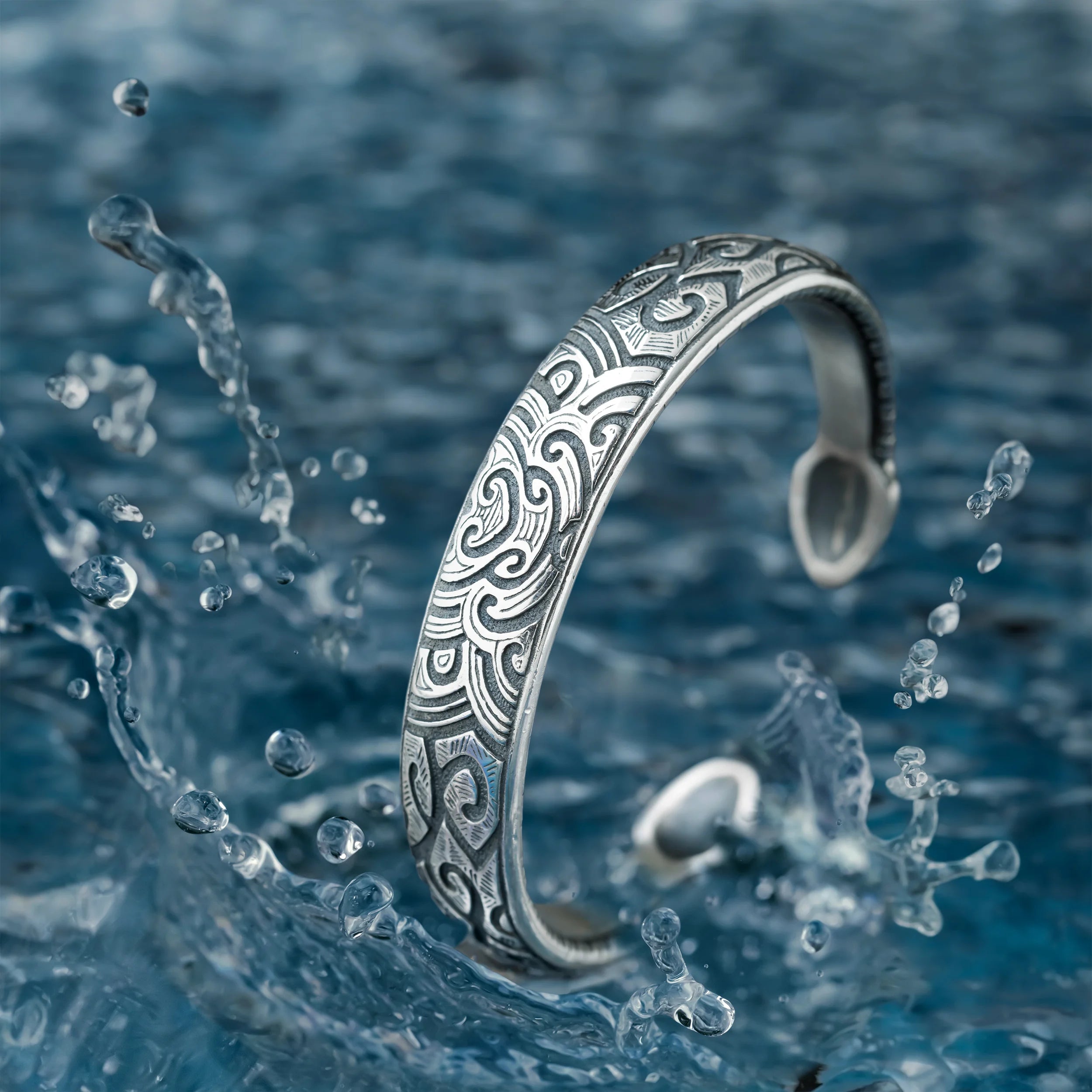
For these pieces, bronze forms the structural base, but the finished jewelry is covered with a layer of 99.9% pure silver approximately 6 μm thick, applied by electroplating.
This distinction matters because the surface you see and touch is different.
On solid bronze jewelry, the exposed surface is bronze.
On a newly silver-plated piece, the visible surface is real silver rather than bronze.
And silver has its own characteristic tarnishing process.
Does Silver-Plated Bronze Tarnish?
Yes.
Real silver can tarnish too.
Silver reacts particularly with sulfur-containing compounds in the environment. As this reaction develops, the silver surface may first become slightly yellowish or dull and can eventually become brownish or dark.
So if a Pakabone silver-plated bronze piece changes color, this does not automatically mean that the silver plating has disappeared.
The silver itself can tarnish.
Pakabone silver-plated bronze jewelry is not simply painted with a silver-colored coating. We use an electroplating process to deposit 99.9% pure silver onto the bronze surface, with a silver layer approximately 6 μm thick.
That creates a genuine silver surface while retaining the solid bronze structure and sculptural detail underneath.
However, because this silver exists as a layer over another metal, cleaning silver-plated bronze requires a little more care than cleaning a piece made entirely from solid metal.
Can Silver Plating Wear Over Time?
Yes.
Any plated surface can gradually wear, especially in areas exposed to repeated friction.
On jewelry, the most exposed points are usually raised surfaces and areas that constantly rub against skin, clothing or other objects.
How quickly this happens depends heavily on how the piece is worn and treated.
This is also why aggressive polishing should be avoided.
Polishing works partly through mechanical abrasion. Each time a metal surface is polished, an extremely small amount of material can be removed. On solid bronze this changes the surface; on a plated object, repeated aggressive polishing can gradually reduce the thickness of the plating.
Pakabone uses a substantial silver layer of approximately 6 μm, but it should still be treated as a plated surface.
Gentle cleaning is preferable to frequent aggressive polishing.
How We Recommend Cleaning Pakabone Jewelry
Our recommended cleaning method is intentionally simple.
We use it for both solid bronze and silver-plated bronze jewelry.
Take a clean damp cotton cloth and apply a small amount of toothpaste to it.
Gently rub the metal surface until the unwanted darkening or dirt is removed.
After cleaning, remove any remaining toothpaste and dry the jewelry thoroughly with a clean, soft cloth.
There is usually no need for complicated chemical treatments.
The important word here is gently.
This is especially relevant for silver-plated pieces, where unnecessary aggressive polishing can gradually wear the silver surface.
It is also important for our sculptural bronze jewelry because some darker areas are intentional.
Do Not Polish Away the Details
This is particularly important with Pakabone jewelry.
Many of our designs contain deliberately darkened recesses.
The darker areas around relief, engraving and sculptural details create contrast with the brighter raised surfaces.
If you aggressively polish every part of the piece in an attempt to make the entire object equally bright, you may remove some of this intentional surface treatment.
Instead, concentrate primarily on the exposed raised surfaces that you want to brighten.
Think of the dark recesses as part of the sculpture rather than dirt that needs to be removed.
The same principle applies to many traditional bronze sculptures: patina is part of the visual character of the object.
What Should You Avoid When Cleaning Bronze Jewelry?
More aggressive does not necessarily mean cleaner.
Strong acids and harsh chemical cleaners can react with copper alloys and alter their surface. Conservation guidance for metal objects specifically warns that inappropriate acidic or harsh cleaning compounds can cause unwanted corrosion products on copper alloys.
For Pakabone jewelry, we therefore prefer the simple cleaning method described above rather than aggressive chemical treatments.
You should also avoid heavy abrasive polishing.
This is particularly important with silver-plated bronze, because repeated abrasive cleaning gradually removes some silver along with the tarnish. Conservation research on silver-plated objects confirms that excessive polishing can damage or eventually remove thin silver plating.
Gentle, occasional cleaning is normally enough.
How to Keep Bronze Jewelry Looking Good
You cannot completely prevent a reactive metal from interacting with its environment, but a few simple habits can reduce how quickly the surface changes.
Keep your jewelry reasonably clean and dry.
After heavy perspiration, wiping the metal with a soft cloth before storing it can help remove moisture and residues from the surface.
Avoid leaving jewelry wet for long periods.
Cosmetics, perfumes and household chemicals are also best applied before putting your jewelry on rather than directly onto the metal.
When the jewelry is not being worn, keeping it in a dry place and limiting unnecessary exposure to humidity and contaminants can slow surface changes.
Silver is particularly sensitive to sulfur-containing gases, and higher humidity can accelerate silver tarnishing.
But there is no need to become obsessive about keeping bronze completely unchanged.
Solid bronze is a material that naturally develops with use.
Should Bronze Jewelry Always Look New?
We do not think it has to.
There is a difference between caring for jewelry and trying to freeze its surface permanently in the condition it had on the day it was made.
Bronze is particularly interesting because it records some of its history on its surface.
Raised areas may become smoother and brighter from contact. Recessed areas can remain darker. The overall color can become warmer and deeper.
Some people prefer freshly polished bronze.
Others prefer the richer appearance that develops after months or years of wear.
Neither is necessarily wrong.
If you prefer a brighter appearance, occasional gentle cleaning can restore much of the original shine.
If you like the darker character that develops naturally, you can simply allow the bronze to age.
Is Tarnish the Same as Damage?
Usually, no.
A stable darkening or color change on a bronze surface is different from destructive active corrosion.
Conservation specialists distinguish between stable patina and active corrosion. Stable surface layers can remain on copper alloys without representing ongoing destructive deterioration, while localized powdery or rapidly developing corrosion products may indicate a different problem.
For normal jewelry use, gradual brown darkening is generally what you are most likely to encounter.
The important distinction is that a change in color does not by itself mean that your bronze jewelry is damaged.
Frequently Asked Questions
Does bronze jewelry tarnish?
Yes. Bronze contains copper, which reacts gradually with oxygen, moisture, sulfur compounds and other substances in the environment. This can cause the surface to darken or develop a patina over time.
How quickly does bronze jewelry tarnish?
There is no fixed timeframe.
Humidity, perspiration, skin contact, cosmetics, storage conditions and how frequently the jewelry is worn can all affect how quickly its appearance changes.
Can bronze jewelry turn skin green?
Yes, it can. Copper-containing compounds can form on the surface of bronze and sometimes transfer to the skin, producing a temporary green or blue-green mark. This does not automatically indicate poor-quality bronze.
How do I clean Pakabone bronze jewelry?
We recommend putting a small amount of toothpaste on a damp cotton cloth and gently cleaning the metal surface. Remove any residue afterward and dry the piece thoroughly with a clean, soft cloth.
Can I clean silver-plated bronze the same way?
Yes. This is also the cleaning method we recommend for Pakabone silver-plated bronze jewelry.
Use gentle pressure and avoid prolonged aggressive polishing because the silver is a plated surface.
Is Pakabone silver-plated jewelry made with real silver?
Yes.
Pakabone silver-plated bronze jewelry is coated with 99.9% pure silver using electroplating. The silver layer is approximately 6 μm thick.
Does silver-plated bronze tarnish?
Yes. The exposed silver surface can tarnish when it reacts with sulfur-containing compounds in the environment.
Darkening therefore does not necessarily mean that the silver plating has worn away.
Should I remove all dark areas from Pakabone bronze jewelry?
No.
Some recessed areas of Pakabone jewelry are deliberately patinated and darkened to emphasize relief and sculptural detail.
Cleaning should remove unwanted surface tarnish and dirt without eliminating the intentional contrast of the design.
Can I prevent bronze jewelry from tarnishing completely?
Not realistically if the bronze surface remains exposed and the jewelry is regularly worn.
You can slow the process by keeping the piece clean and dry and storing it carefully, but gradual surface change is a normal characteristic of bronze.
Bronze Is a Material That Changes With You
Bronze does tarnish.
Silver does too.
That does not make either material unsuitable for jewelry.
It simply means that these metals interact with the world around them.
At Pakabone, we use this quality as part of the design. Our solid bronze jewelry combines brighter raised surfaces with deliberately darker recessed details, allowing sculptural patterns and textures to stand out.
For customers who prefer the appearance of silver, we also produce silver-plated bronze jewelry, electroplated with approximately 6 μm of 99.9% pure silver.
Both finishes require only straightforward care.
Clean them gently when necessary, avoid aggressive polishing, keep them reasonably dry and remember that not every darker area needs to disappear.
A bronze piece does not have to look exactly the same forever.
For many people, the way it gradually develops its own surface and character is part of the reason for choosing bronze in the first place.



Leave a comment
All comments are moderated before being published.
This site is protected by hCaptcha and the hCaptcha Privacy Policy and Terms of Service apply.