




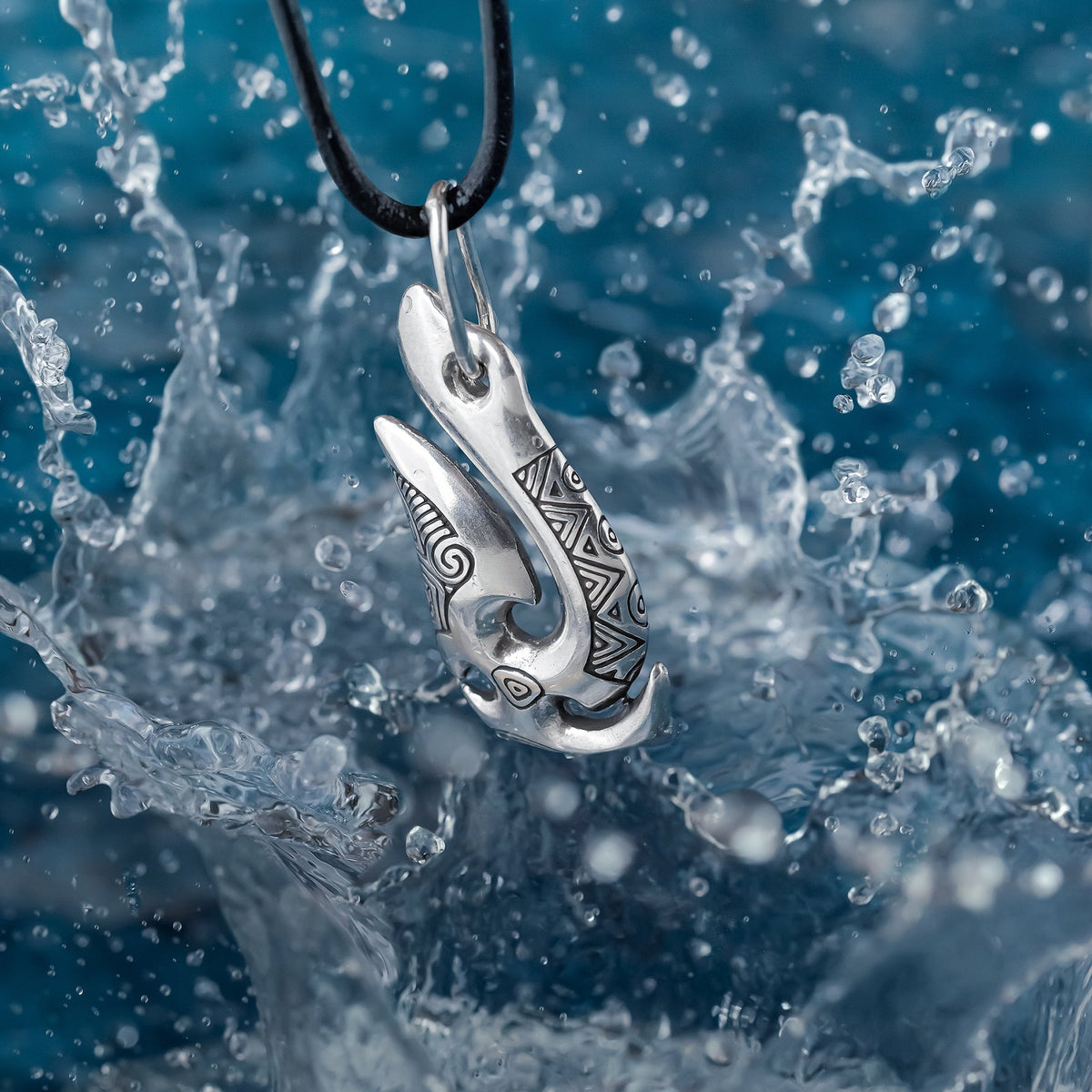
The distinctive curved shape of the Hei Matau is instantly recognizable as a fish hook. Today it appears in pendants, necklaces, bracelets, and other ocean-inspired jewelry, but the story behind the symbol goes much deeper than its striking form.
Hei Matau comes from Māori culture in Aotearoa New Zealand and reflects a deep relationship with fishing and the sea. It is also closely associated with Māui, one of the best-known ancestral figures in Māori and wider Polynesian traditions.
Today, Hei Matau is widely associated with strength, prosperity, good fortune, and safe travel over water.
But what does Hei Matau originally mean, and where does this symbolism come from?
What Does “Hei Matau” Mean?
The meaning begins with the name itself.
In te reo Māori, hei refers to an ornament worn around the neck, while matau means a fish hook. Hei Matau therefore describes a neck pendant in the stylized form of a fish hook.
Traditional examples were often carved from pounamu, the highly valued New Zealand greenstone.
The fish-hook form was not chosen at random. Fishing was of great practical and cultural importance to Māori, making the hook a natural symbol of the relationship between people and the sea.
Hei Matau and the Story of Māui
One of the strongest cultural associations of the Hei Matau comes from the story of Māui.
According to Māori tradition, Māui went fishing with his brothers and used an extraordinary fish hook to pull a great fish from the ocean. That fish became New Zealand's North Island, known as Te Ika-a-Māui — “the fish of Māui.”
The Museum of New Zealand Te Papa Tongarewa describes Hei Matau as symbolic representations of Māui's fish hook. The museum also connects the form with the importance of fishing to Māori and their relationship with Tangaroa, associated with the sea and its creatures.
This gives the apparently simple hook shape a much deeper cultural history.
What Does the Māori Fish Hook Symbolize?
There is no need to reduce the Hei Matau meaning to a single idea. Several layers of symbolism have become associated with the fish hook.
Strength
The fish hook is widely associated with strength and determination — qualities required both for fishing and for navigating the challenges of life.
Prosperity and Abundance
Because fishing traditionally provided an important source of food, the Hei Matau is also widely associated with prosperity and abundance.
Safe Travel Over Water
One of the best-known modern meanings of Hei Matau is safe passage or safe travel over water. This has made the fish-hook design especially meaningful to sailors, travelers, surfers, and people who feel a personal connection with the ocean.
The Sea
At its most fundamental level, the shape represents a relationship with the moana — the ocean. Its origins are inseparable from fishing and life around the sea.
Māui and Tangaroa
The symbol also recalls the story of Māui and his legendary hook, while traditional Māori interpretations connect fishing and the sea with Tangaroa.
Together, these associations help explain why Hei Matau has remained such a powerful and recognizable design.
Was Hei Matau Always Jewelry?
Traditional Māori fish hooks were first and foremost sophisticated working tools.
Hei Matau, however, refers specifically to the stylized hook form worn as a neck ornament. Historical examples survive in New Zealand museum collections, including hand-carved pounamu Hei Matau dating from the pre-European and early colonial periods.
This distinction is important: the modern fish-hook pendant did not emerge from an arbitrary decorative shape. Its design comes from an object with a real and important place in Māori fishing culture.
Why Is Hei Matau Worn Today?
Today, people may choose a Hei Matau for different reasons.
For some, it has a direct connection with Māori culture and Aotearoa New Zealand. Others are drawn to its associations with strength, prosperity, safe journeys, fishing, or the ocean. For sailors, surfers, anglers, and travelers, the fish-hook form can have an especially personal significance.
And for some, it is simply an elegant design whose flowing curve works naturally as jewelry.
Whatever the reason, knowing the origins of the symbol gives the piece more meaning than treating it simply as a generic “tribal” motif.
Hei Matau in Modern Jewelry
The strong curved silhouette of the fish hook translates naturally into contemporary jewelry.
Traditional Māori Hei Matau are particularly associated with carved pounamu. Modern jewelry makers around the world have also interpreted the recognizable fish-hook form in silver, bronze, wood, bone, and other materials.
At Pakabone, we create contemporary jewelry inspired by the Hei Matau form, rather than traditional Māori pounamu carvings.
Our designs include handcrafted fish-hook necklaces and pendants in sterling silver, bronze, and silver-plated bronze, as well as leather and cord bracelets featuring the recognizable hook motif.
Explore Hei Matau necklaces and fish hook pendants
Choosing a Hei Matau Necklace or Bracelet
The best choice depends on how you want to wear the symbol.
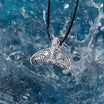
A Hei Matau necklace or pendant makes the hook the focal point. Its sweeping silhouette works especially well as a simple statement piece and keeps the symbolism clearly visible.
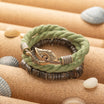
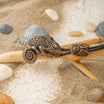
For a more understated option, a Hei Matau bracelet integrates the hook into leather or cord and is easy to wear every day.
Material also changes the character of the piece. Sterling silver creates a brighter, more refined appearance, while bronze gives the design a warmer, earthier look.
For example, Pakabone's sterling silver Hei Matau pendant emphasizes the hook itself as the centerpiece, while the Hei Matau leather bracelet combines the symbol with braided leather for a more casual everyday style.
For those who prefer natural textures, the Hei Matau fish hook bracelet set combines the hook with cotton cord and wooden beads.
A Symbol With a Story Behind It
The Hei Matau is recognizable because of its simple fish-hook form, but the story behind that form is much richer.
Its roots lie in Māori fishing traditions and the relationship with the sea. It recalls Māui and his legendary hook and reflects the importance of fishing and Tangaroa in Māori culture.
Over time, Hei Matau has also become widely associated with strength, prosperity, good fortune, and safe travel over water.
Modern jewelry has carried the shape around the world, but its origins remain in Aotearoa New Zealand. Understanding those origins allows us to appreciate Hei Matau not merely as an attractive piece of ocean-inspired jewelry, but as a design with a specific cultural history behind it.
Frequently Asked Questions
What does Hei Matau mean?
In te reo Māori, hei refers to an ornament worn around the neck and matau means fish hook. Hei Matau is a stylized fish-hook neck pendant originating in Māori culture.
What does the Māori fish hook symbolize?
Hei Matau is widely associated with strength, prosperity, abundance, good fortune, and safe travel over water. Its deeper cultural roots are connected with Māori fishing traditions, the sea, Māui, and Tangaroa.
Is Hei Matau connected to Māui?
Yes. Hei Matau is associated with the legendary fish hook of Māui. In Māori tradition, Māui used his hook to fish up Te Ika-a-Māui, the North Island of New Zealand.
Is Hei Matau a symbol of safe travel?
Safe travel, particularly safe passage over water, is one of the meanings widely associated with Hei Matau today.
Are traditional Hei Matau made from greenstone?
Many historical and contemporary Māori Hei Matau are carved from pounamu, New Zealand greenstone. Contemporary interpretations of the fish-hook form are also made from silver, bronze, bone, wood, and other materials.
Can Hei Matau be worn as a bracelet?
Traditionally, the term Hei Matau refers to a hook-shaped neck ornament. Contemporary jewelry makers also use the recognizable fish-hook motif in bracelets and other forms of jewelry.


Leave a comment
All comments are moderated before being published.
This site is protected by hCaptcha and the hCaptcha Privacy Policy and Terms of Service apply.